Latest Updates

Crop Planning in the Vegetable Garden


Growing vegetables in the home garden is gaining increasing importance. In the relatively small areas but can only be achieved by a well-considered and planned cultivation a steady cover and thus use of the vegetable garden. About 150 m² of gardens are sufficient to attract the vegetable needs for a family of four who loves to eat vegetables. Also for potatoes that taste best from your own vegetable garden, there will be room.

Classification of the vegetable garden

An old rule cultivation according supported the claims of the individual vegetable species by dividing the area into three groups account. If annual exchange of land, guests will reach the plant conservation terms very positive rotation. Particularly in the mixed culture, this classification is common in high, medium and low Zehrer . Among the means Zehrern is expected especially the root vegetables here.
If you decide on a mixed culture, that is, you planted several vegetable species simultaneously on a bed, one first determines the combination of plants for each bed, which you should consider the following criteria :
Combine resources Zehrer with weak or strong Zehrern Zehrern deep-plants with shallow-rooted plants together. Combine plants that shade the ground a little, with such that shade more positively affecting plants, crops (eg carrots/onions) together.

The next year, a change of flowerbeds done (combination is retained), so that the vegetables to other plant families than last year or in recent years include. To facilitate this work, you can look in gardening books or on the Internet (search term mixed culture). Here you will find suggestions of best combinations .

1. Stark consuming vegetables: cabbages, kohlrabi, lettuce, cucumbers, tomatoes, leeks, spinach and endive-all bring very large sheet masses, which necessitate a strong fertilization and irrigation.

2. Weaker consuming vegetables: root vegetables such as carrots, parsley, salsify, radishes and radish. The fertilization takes place and reduced only modestly with organic agents, since these are said to have attractive effect on vegetables flying.

3. Weak consuming vegetables: Legumes such as beans and peas, also onions. They, too, says a pure nitrogen fertilization not to. They especially love Kali. This nutrient also strengthens the plant tissue and makes it more resistant to the weather, various diseases and pests in our vegetable garden.

Classification of the vegetable garden beds 

Around the country, not festzutreten the daily harvest, the area is divided into single beds. These are most conveniently applied 1.20 m wide. Between the beds is a path of 30 cm width. The following examples are given to planting of flower beds:

Then you can 3 rows white, red, savoy, flowers or Brussels sprouts plants:
A number is located in the center and two rows of 10 cm from the edge. In the ranks of the plants are 50 cm apart. Since the carbon initially does not fill the free space can be used as intermediates early planting lettuce and early kohlrabi. These have long been harvested, until the cabbage concludes the series. After harvesting cabbage stalks are to be fed with gall-like growths on the roots against the garbage. Even with stumps rot fungus may be affected and should not be composted. Another bed is planted with celery, kohlrabi or bush beans. These cultures are also in planted or sown 50 cm row spacing. In the ranks of the plant is only 40 cm distance, because they do not develop as strong as the late cabbages standing on the bed 1.

Celery leaves that are infected in the summer of the leaf spot disease, should be removed immediately. Beet 3 is intended for cucumbers. Of the cucumbers only a number comes on to the bed, in series to receive the cucumber at a distance of 30 to 40 cm. As a side planting you choose lettuce or early kohlrabi. Since cucumbers are first placed or planted in mid-May, we planted the bed until then removed with two more rows of lettuce namely 30 cm from the center row. 

The longer it is possible to prevent mildew on cucumbers, the greater the harvest will be. Here, the preventive use of plant strengthening agents is advisable. From lettuce, turnip and leek breakfast four rows come on the bed. The distance between the rows is 35 cm. In the rows, the plants are 30 cm apart. As the leeks to the development needs longer time and mainly grows vigorously in late summer, alternately salad and breakfast cabbage can be planted in rows.

Garden Design Ideas for a Beautiful Garden with Unusual Ideas


Beautiful garden idea can only be created by appropriate garden planning. In the design of the garden owners are no limits. Depending on the size of the garden is especially recommended design elements such as a pond, creek or herbs Rondell.

For a successful garden design idea, it is helpful to make an advance planning on the paper. Once the dimensions of the plot are determined, they can be transferred with the help of graph paper. Then you should consider where flower beds are to be created or where trees are desired. Also, garden ponds, children's play areas and rest areas can be scheduled. The great advantage of a pre-planning on the paper is that one can arbitrarily change and go through many different variants.

If you have decided is to consider what plants, shrubs, perennials and flowers would be appropriate. It is important to make sure that the plants are rather large rear and allowed to fall to Beetrand the height of the planting to the front. You should also pay attention to the color scheme for the flowers to pretty match.

It must also be borne in mind when which plant flowers and whether a shaded, semi -shaded or a more sunny place should be chosen. It pays attention to annual or perennial plants, and the appropriate planting or setting time.

In newsagents there are numerous very good journals and in book stores, there are some even separate areas with garden literature in garden design idea. The best advice is still, however, receives the specialist at the nursery or garden retailers. Here is a also helped in purchasing. Sometimes it is even possible to borrow larger garden equipment. Finally, should you can still advise you when and what lawn should be seeded in part of garden design idea.

Japanese Garden Art


The Japanese garden has its origins in China and Korea. Japanese monks who traveled to these countries , brought the art of gardening in Japan. Over the centuries created different styles that are cited today. Since many very old gardens have received in Japan by the consistent care, you can visit in Japan, the whole garden history in many public gardens and understand. Modern Japanese Garden artists draw not only from historical topics such as Zen gardens, pond gardens, convertible, tea gardens, viewing gardens-today there are many modern interpretations or entirely new directions of Japanese garden design, not only in Japan but worldwide.

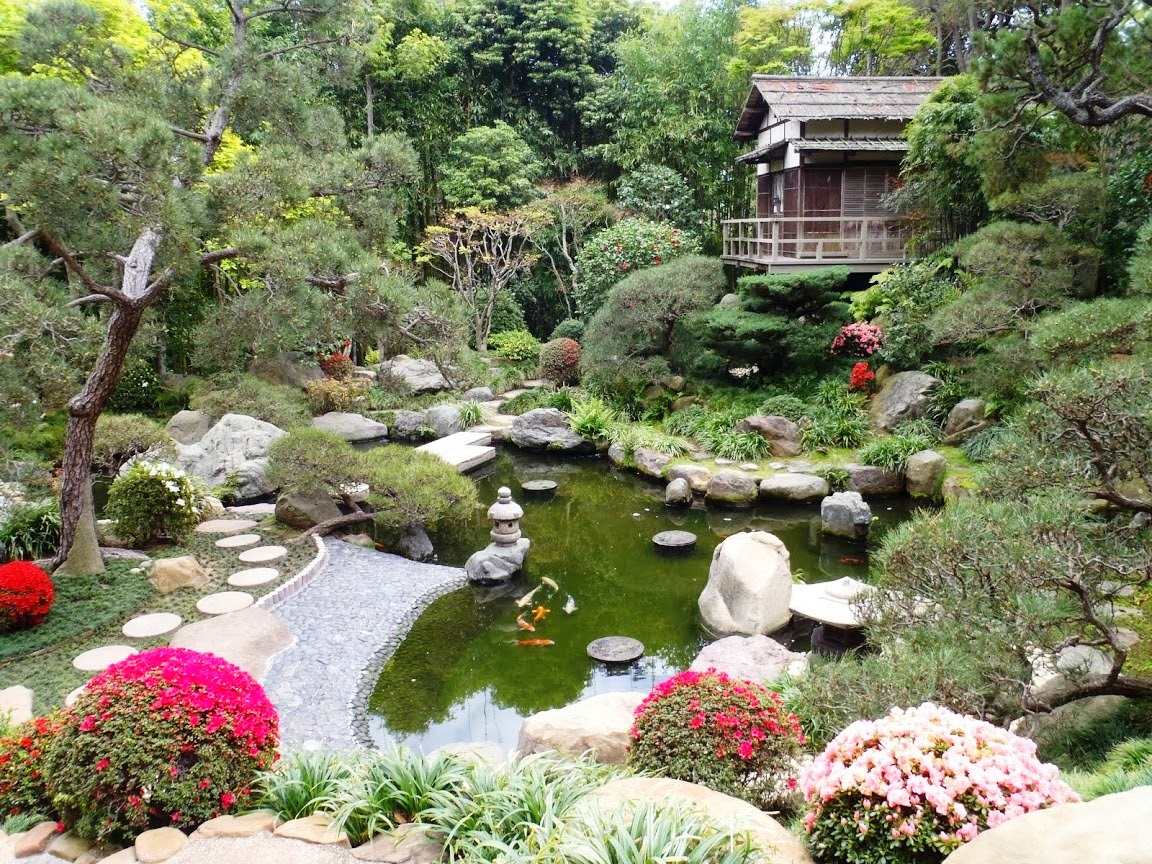
The main elements of the Japanese garden are: rocks, garden rocks, stones, stone circles, stepping stones, paths, bridges, Nobedan, tobi - ishi, grit, gravel, pebbles, gravel, sand, decorated pine trees (not bonsai), azaleas, o-karikomi, o-tamamono (which are topiaries), sometimes ornamental cherries, plums, ground cover like moss, grasses, bamboo, ferns. Water is present in the pond, koi pond, koi, creek, river, waterfall, fountain , but also as grit surface in a karesansui Garden (meaning dry landscape garden) before or as Pebble creek, dry lake, Tock Bach. Furthermore you will find in the Japanese garden ornamental elements such as Japanese stone lanterns, Japanese water basin, rare pagodas and Buddha. Architectural elements such as gate, fence, fence sleeves, sleeve fences and fences, called gaki, waiting bench or pavilion (machiai, azuma ), tea hut, in the tradition of Sukiya are mostly architecture.


Shukiya features natural materials, which are processed into high-quality craftsmanship, and by certain proportions and parts of buildings, such as over roofs (engawa, engava-this is a narrow terrace that leads around the house) sliding doors, patios (tsubo-niwa).

The Japanese garden style is also characterized by various aesthetic features such as naturalness, asymmetry, reduction, abstraction, spontaneity. All artificiality, Ostensible is avoided in the Japanese Garden-patina as signs of wear, mosses and lichens are estimated in the Japanese Garden ( wabi sabi-). Simple surfaces from debris or ground cover or as a background fences bring the individual garden elements to even better effect and convey calm and clarity. Formal, man -made such as hewn, cut stone, topiaries, such as o-or o-karikomi tamamono are in contrast to natural forms such as a complex delicate maple, acer japonica. The subjects are often Japanese landscapes, which are presented in an abstract (not miniaturized!) Way in japanese garden.

So rich, for example, a fern, a barren bush, a rock and moss in order to create a Waldathmosphäre. The Japanese garden playing with understatement and is more concerned with the natural opposites of light and shadow, surface and volume, inside and outside, and the vicissitudes of the seasons. In the Japanese garden, Japan Garden, it's more about the sensual experience of fine, sensitive perceptions such as trickling water pool, the sound of the bamboo, dew on the ferns, scattered leaves on a moss area, etc. These things you can experience better than in any other garden form of the Japanese garden, because the Japanese garden is made??, exactly for these perceptions and takes this into account in the design. Unfortunately, many misconceptions have been established in the design way of Japanese gardens, which are in our opinion, the Japanese garden art does not do justice.

To build an authentic Japanese garden, you need a lot of expertise and many design tricks. Some of them you can find in our free building instructions to Nobedan, Tsukubai, Yotsume-gaki, yaku-ishi, o- karikomi, tama-mono, soon even the jaw design and other related topics.

Maintain your Garden in the Spring, Well Work the Land

To have a beautiful garden in the spring, we must learn to maintain. Here are the tips and good gestures to adjust according to your soil, your climate and your particular garden.

Spring Garden In March :

• Digg your garden land. Digging is to crack and turn the soil with a spade, a gardening tool, to loosen and aerate the soil. This method allows to make the necessary gas plant growth and have pores and cavities in the ground to a better water retention. To dig, dig trench 30 to 40 inches deep and pour fertilizer. Then indulge with the earth. The Botanic garden fork.


Spring Garden in March-April:

• Treat fruit trees susceptible to disease. These treatments are applied prevention to prevent new parasites infect the leaves and fruits. To do this, choose natural and organic products such as white oil that has insecticidal properties, washes clay-based and Bordeaux mixture (copper and lime).

• Sow green manure spring. Green manures are plants to be cut and incorporated into the soil. From mid-March, sow mustard and fava beans germinate in cold weather. During April, sow phacelia, buckwheat and vetch. Cut green fertilizer 4-6 weeks before the next crop.

• Weeding the spring garden and ornamental garden. Some natural methods to control weeds:

Collect water-cooking pasta, rice or potatoes and pour over the weeds.

- Use of salted water to remove weeds and moss. For foam, so be sure to scarify the lawn. Scarifier wheeled Botanic .

- Pour 1 liter of white vinegar in a pint of water and then sprinkle in the late afternoon.


Spring Garden in May-June :

• Grind and incorporate green manures spring. Once broken, they retain soil nutrients and serve as input of organic matter.

• Mulch the vegetable and ornamental garden. Mulching is a process that involves covering the soil with plant or mineral materials, in order to slow the growth of weeds. Use of wood chips, bark of cocoa beans or straw by the floor.

• Mount the cutting height 6 cm.

A Garden Party Celebrate

Whether garden party with friends , a picnic with the whole family or coffee gossip with the neighbors is now celebrated outside and indeed to the soul laughs and the lawn glows. With beautiful decorating ideas, furniture in a celebratory mood, and many large and small guests the garden party is like a midsummer night's dream.

Where is garden party celebrated ?

A garden party is celebrated course in the garden. Since the garden party outside takes place and no four walls insulate the sound, the garden party should be notified necessarily at the neighbors - at least when celebrated late into the evening. Better yet, invite the neighbors with the same one, then no one can complain. The terrace is wonderful as a party location, especially when the temperature is cooler and the terrace covered. A nice gesture at the garden party are way warm blankets or open fires, warm you on the slightly chilly guests. Think about when planning a garden party also necessarily a bad weather alternative. A waterproof sun shade, a gazebo tent or covered terrace offer retreats for water-shy. And should the garden party actually completely fall into the water : Do not despair! Who bears the sun in your heart, even throws a rain shower, as if radiant summer weather.

Who is garden party celebrating with ?

Photo: Rice
Family reunion or neighborhood center, children's birthday party or a picnic with friends, or just looking to be outside? A garden party, you can celebrate with all that people like to have around, the main thing you spend joyful hours. Depending on the guest list but you should adjust decoration, outdoor furniture and summer recipes for young and old have different demands on the garden party. Think of your garden party, for example, whether you want to celebrate more of a get-together or a wild bash. Need upholstery on the chairs, because at the garden party with the family, older family members will be present or can all take on picnic blankets or lounge furniture in place? Do you want to serve cool drinks or hot coffee? Are the garden torches too dangerous when children are present? Many such questions must precede the garden party, so that the hard succeed. Speaking of children: Keep toys ready. If the kids are not busy enough, the garden party is to stress test and the open sky. Outdoor games like croquet, bocce Kubb and make adult fun-and come to Strawberry pie and grilled sausage just right.

Beautiful decoration for garden party


For the garden party garden and terrace are dressed properly. The most important characteristic of the party decorations: Water resistant they should be, or at least robust enough to withstand the outdoor evening. Good china , noble or precious velvet tablecloths should stay in the house, because at the garden party, it 's always a little bit bumpy to as indoors. With simple ingredients like beer tables, wallpaper radicals as table runners and a little imagination but is decorated quickly and easily. Bunting, picnic blankets or party dishes a splash of color, stripes, dots and floral patterns give a garden party for the right mood.

When lighting the garden party, you should definitely put on paper lanterns, lanterns and hurricane lamps. Also, candles and open flames gild every summer evening with a romantic light. But sometimes even nature itself enough decoration: Twilight Blue Hour and create a wonderful atmosphere.


Outdoor cooks and Outside seater arrive at the garden party get their money. And the sky is the limit: You can organize a classic BBQ on your garden party, set up a large buffet or all animate for picnicking. And let's be honest: The small snacks during cross-legged but twice as good. Also a great idea: stick bread. The taste of freedom and is a great adventure for the kids. And later the warming flames invite you to Klönschnack. So : Fire at will!

As for the drinks, only one thing matters: cool they should be. For the guests of your garden party hungry for the hot day after a refreshment. Tip: Forego at your garden party best suited to hard liquor: The body reacts to heat differently and tolerate less. Slightly alcoholic drinks like a cool cyclists, white wine spritzer or a fruity summer punch are sufficient for the garden party. Also unalkoholische cocktails or homemade iced tea taste wonderful.

Do you now feel like getting your own garden party? Then you embarrassed but simply the next dinner party outside. A carefree summer menu tastes with friends in the outdoor room but eh at best-and the garden party is all in a wonderful memory.